Notes & process.
A place for observations,
experiments and practical 3D notes.
WebAR & 3D Visualization for Retail: Preparing Scale-Aware Assets
A practical guide to preparing GLB assets for web viewers and scale-aware WebAR, with device validation and measurement considerations.
3D Product Visualization vs Commercial Photography: Choosing the Right E-Commerce Pipeline
A practical comparison of CGI product visualization and commercial photography, covering revision workflow, channel reuse, costs, and interactive WebGL options.
Approving a product animation before final rendering
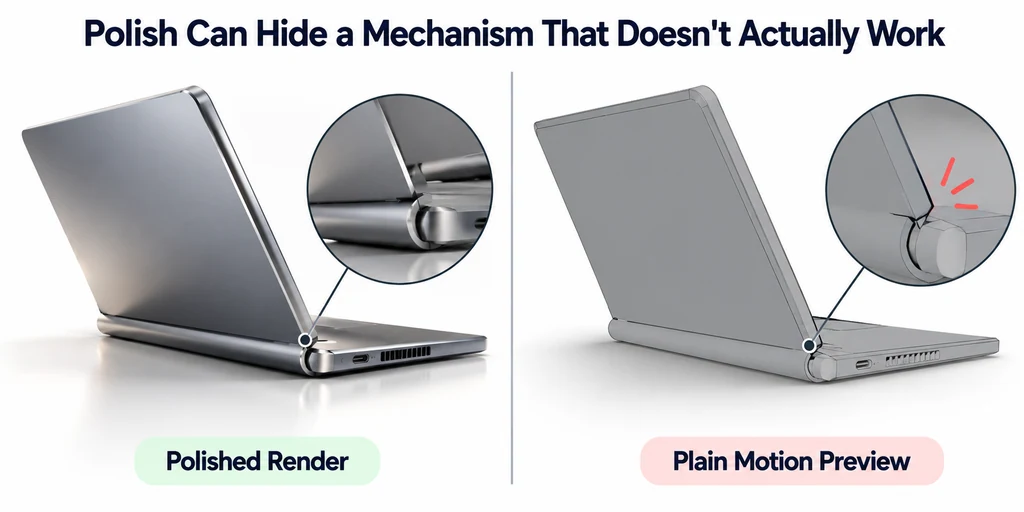
Approve the sequence while changes are still decisions about shots and timing, before they become changes to finished frames. A useful approval identifies the version, the decision accepted, and what remains unresolved. "Looks good" does not establish whether the client accepted the mechanism, the camera move, or only the general style.
Product modeling without CAD: working from photos and drawings
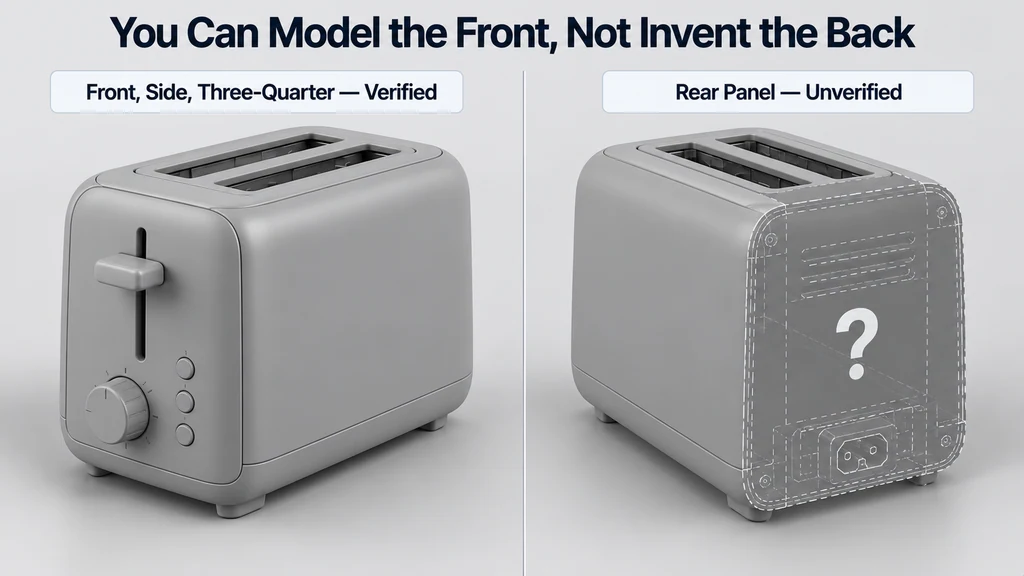
A photograph can show what a product looks like without telling you its exact dimensions. Build a useful model by separating measured facts from visual estimates, then approving the uncertain parts before finishing the surface. A convincing render cannot resolve missing evidence.
Building a lifestyle scene around a product
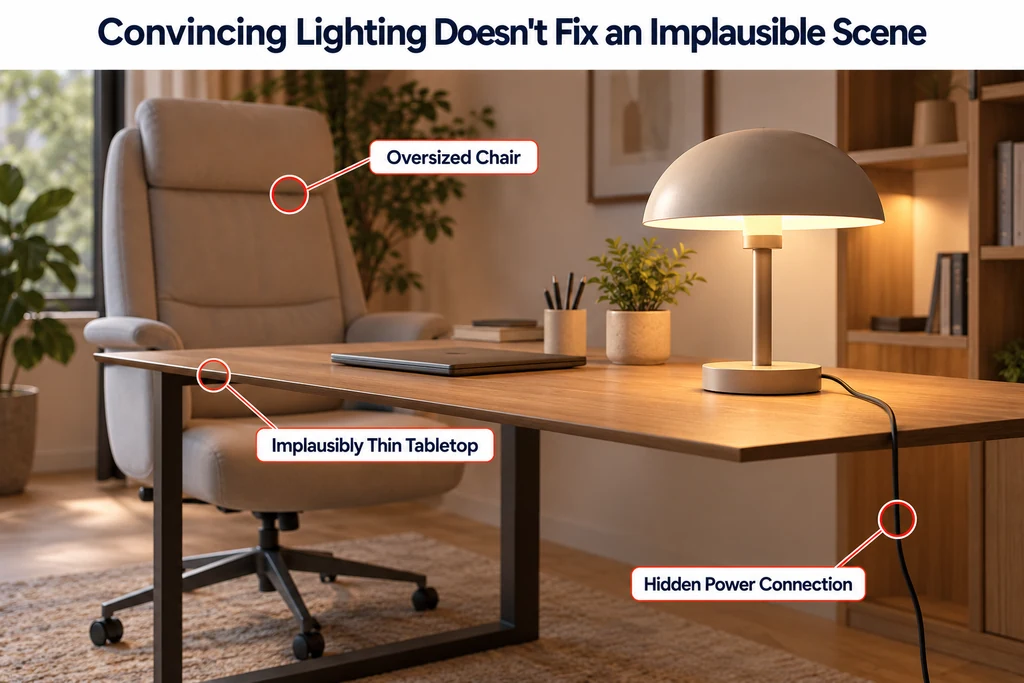
Build the environment around an approved product, not around a mood image that forces the product to change. A lifestyle render should help a viewer understand use, proportion, or placement. If the room makes the product harder to identify, the scene is not doing its job.
Cutaway product animation: explaining hidden mechanisms
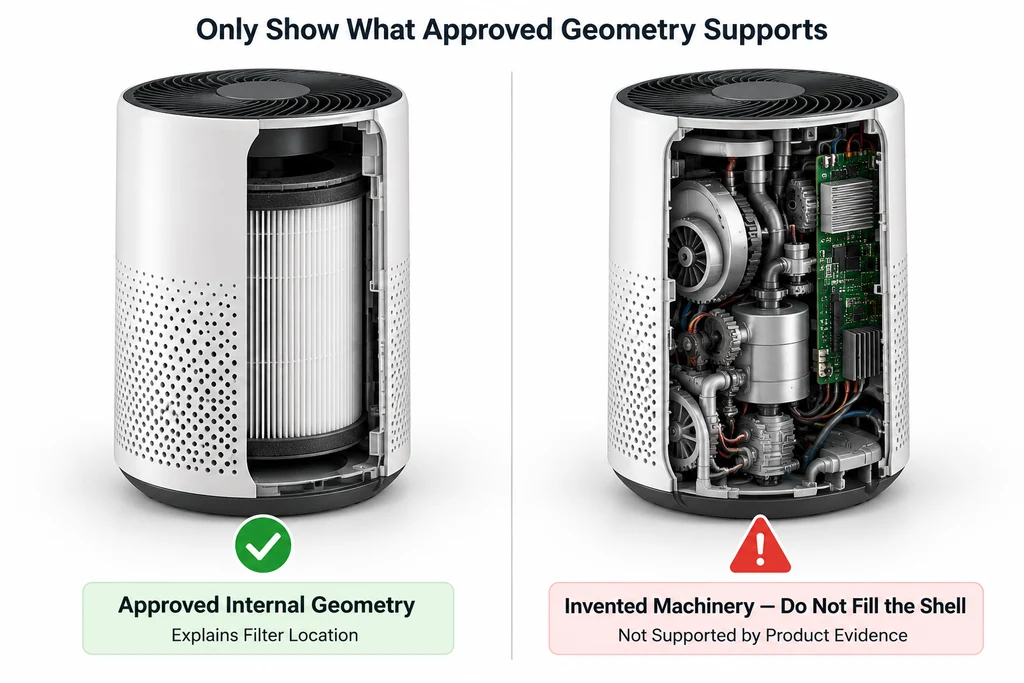
Use a cutaway when the internal relationship is the explanation. Removing a housing can clarify how a latch engages or where a component sits, but only if the revealed geometry and movement are supported by product evidence. Do not fill an empty shell with plausible-looking machinery.
Adapting product animation for vertical, square, and landscape video
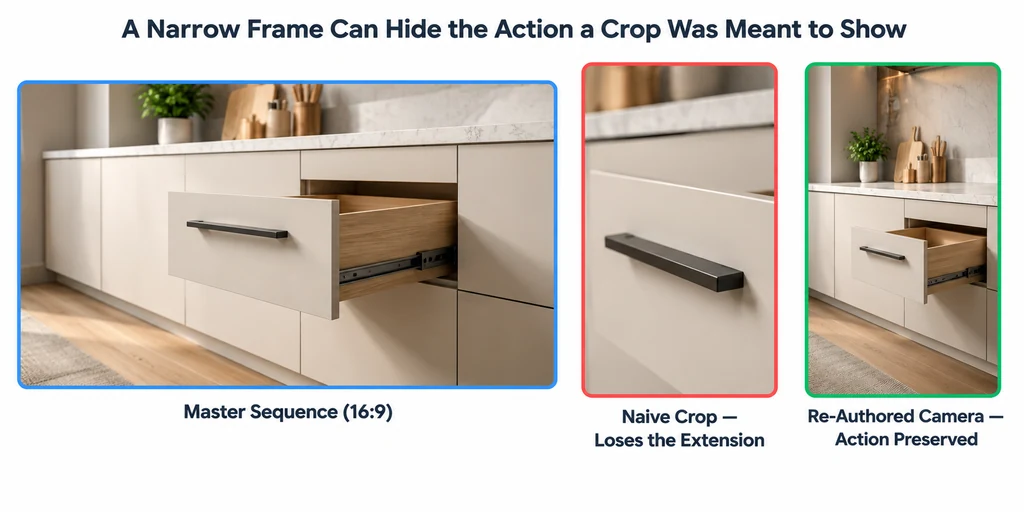
A second aspect ratio is not automatically a crop of the first film. If the explanation depends on two parts visible at once, a narrow frame can remove the relationship that makes the animation useful. Preserve the product action first, then decide how to compose each delivery version.
Use Cryptomatte for product retouching with reliable object masks
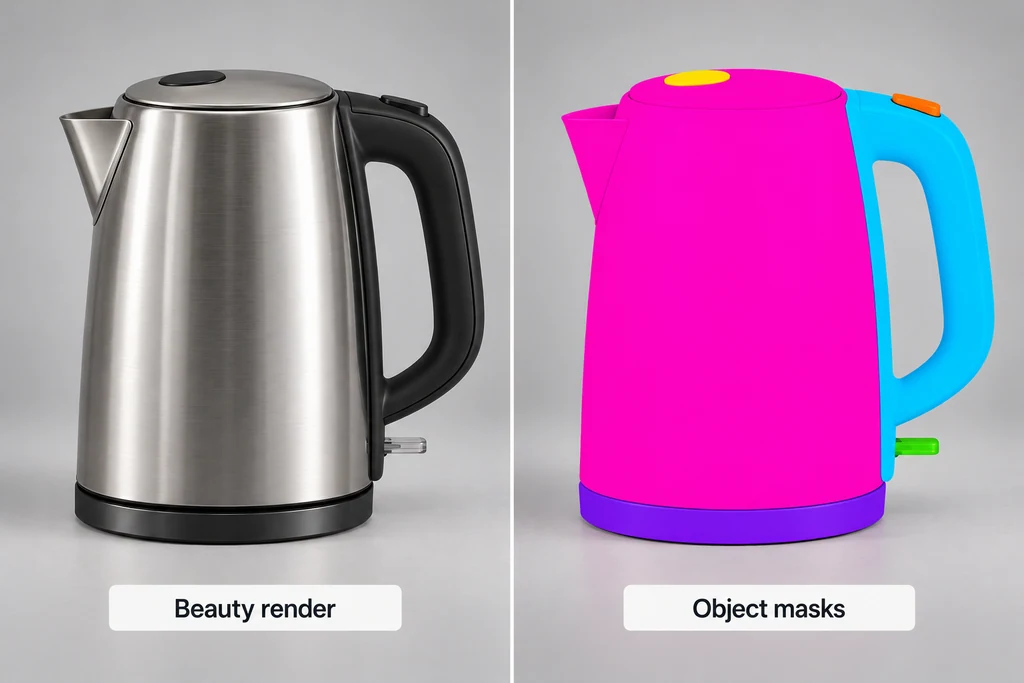
Use Cryptomatte when a product correction needs a repeatable object or material selection. A matte can isolate a housing for a restrained grade or separate a background treatment. It cannot turn a rendered plastic surface into physically correct metal.
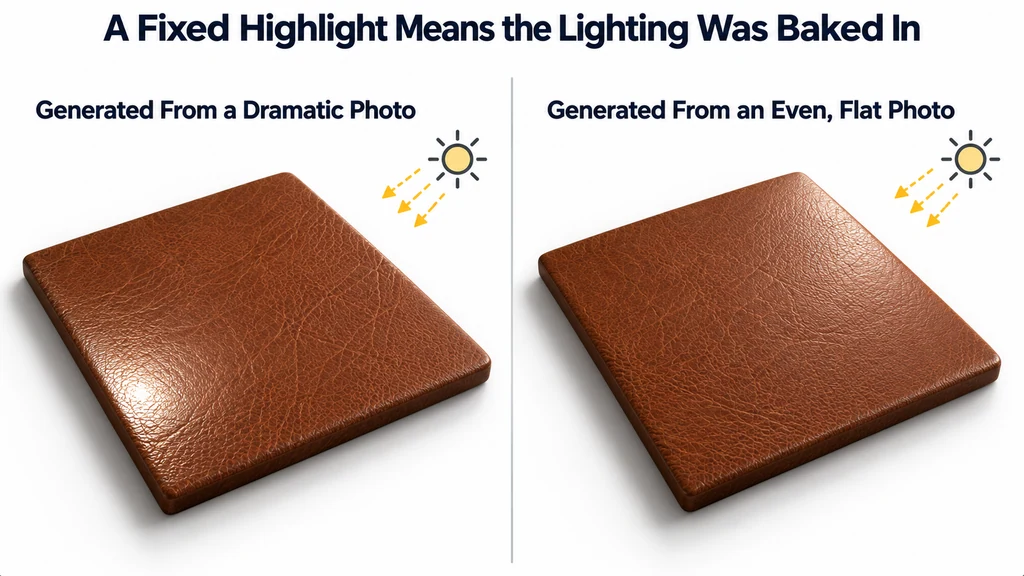
Turn a material photograph into editable PBR maps
A material photograph can start a PBR texture set, but it does not uniquely reveal roughness, height, or metallic behavior. Use generated maps as editable estimates. Compare their effect with the material reference before describing the result as an accurate finish.
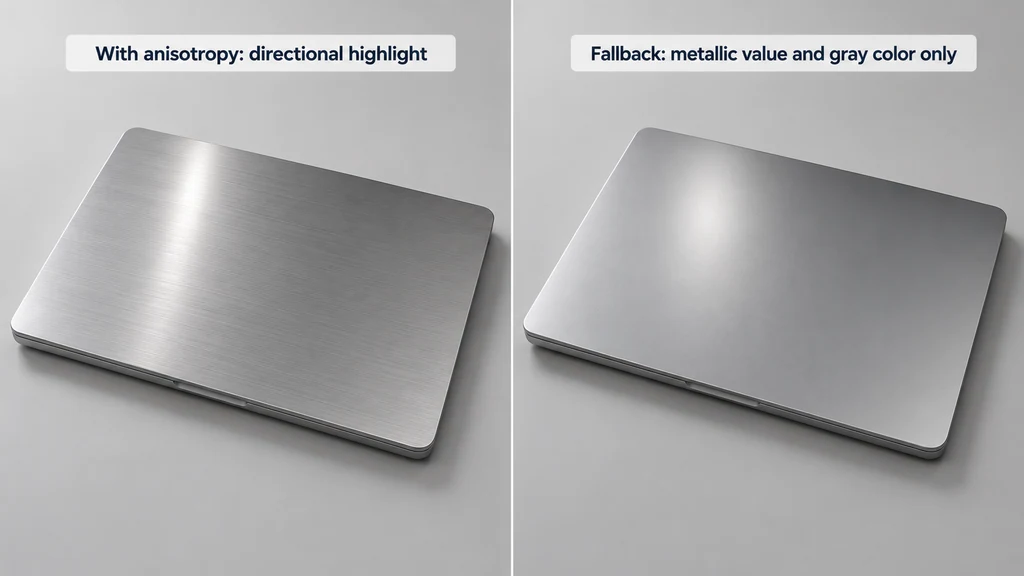
Export brushed-metal direction with glTF anisotropy
A brushed-metal finish needs more than a metallic value and a gray color. Its directional reflection can identify the finish. Preserve that direction through the asset pipeline, then compare it in the receiving renderer before approval.
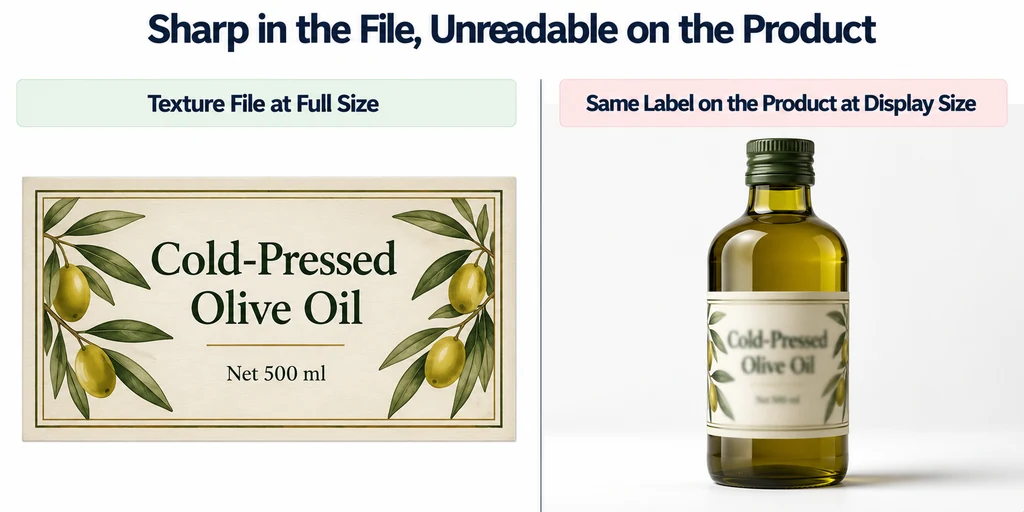
Keep product labels readable at a distance in a 3D viewer
A label can be sharp in the texture file and unreadable on the product. Diagnose the complete path from artwork to screen before replacing the map with a larger one. The limiting factor may be UV allocation, an oblique view, filtering, or simply too few display pixels.
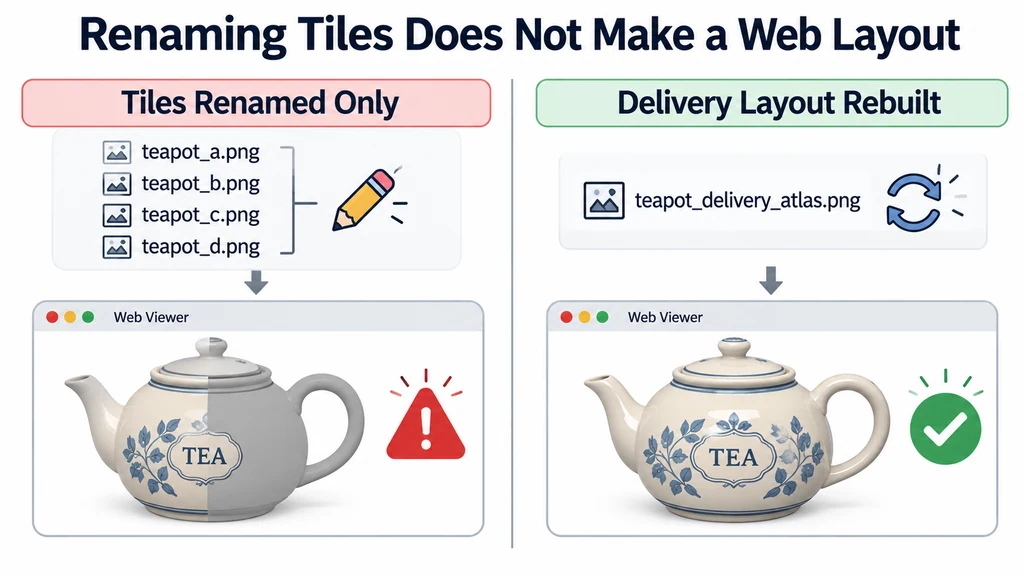
Move a UDIM product texture set into a web-ready layout
Do not treat a UDIM texture set as a group of images that can be renamed into web compatibility. The UV layout, material assignments, and image references must agree with the receiving renderer. Build a delivery copy while preserving the tiled source.