Scope starts with the product state
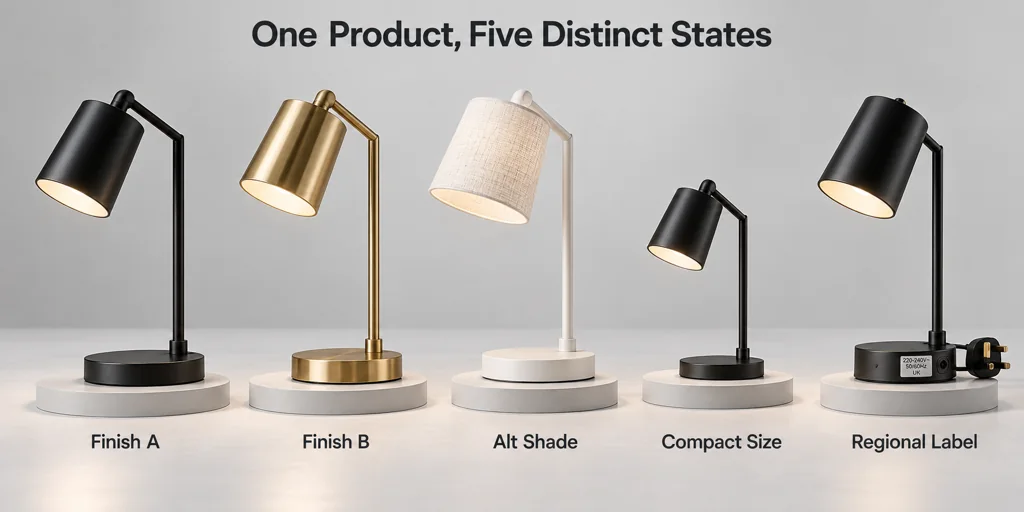
The first cost question is not the number of images. It is the number of distinct product states. A single approved finish and one camera setup is different from a product family with multiple sizes, materials, accessories, and regional labels.
List every sellable configuration that the work must show. Then separate reusable geometry from changes that require a distinct material, mesh, label, camera, or animation.
Source quality changes preparation work
Clean CAD, accurate dimensions, approved artwork, and material references reduce unanswered questions. Incomplete source data can still be workable, but the team must decide which parts need interpretation and who approves that interpretation.
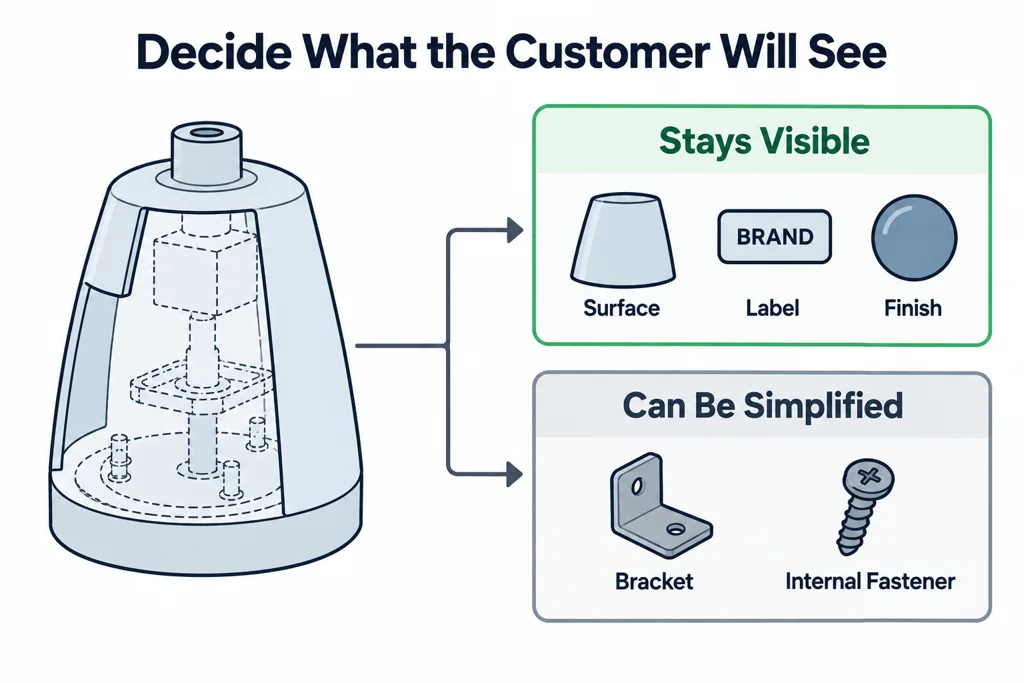
A CAD assembly may include internal parts that never appear in a customer image. It may also omit the finish cues that make the product recognizable. The scope should state what remains visible and what can be simplified.
Outputs are separate deliverables
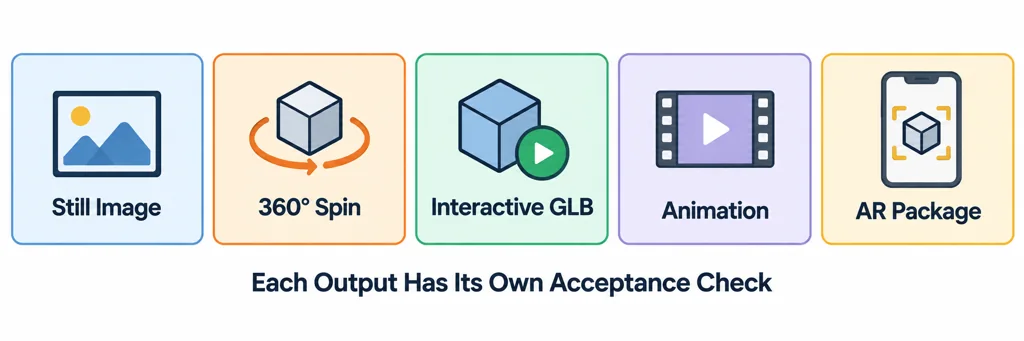
A still image, a 360-degree spin, an interactive GLB, an animation, and an AR package do not have the same acceptance checks. Define the required channels before work begins. A scene built for a high-resolution still may need a different optimization pass for a web viewer.
glTF packages scene data for runtime delivery. It does not guarantee that a complex studio-render scene will have the same visual result in every web renderer.
Compare the work behind similar image counts
| Scope factor | Reuse opportunity | Additional work to identify |
|---|---|---|
| More colors on the same construction | Shared geometry and camera setup. | Material matching, labels, and approval for each state. |
| A different size or accessory | Reuse of some surfaces and lighting. | Geometry, connections, clearances, and composition. |
| Incomplete references | Partial blockout work can begin. | Reconstruction, clarification, and approval of uncertain regions. |
| Web or AR delivery | An approved source can supply derivatives. | Optimization, material translation, packaging, and target review. |
| A late product change | Unaffected assets may remain usable. | Every dependent render, variant, or export that must be regenerated. |
These factors explain a scope discussion, not a price formula. Ten colors do not automatically mean ten times the modeling work, while one construction change can affect many outputs.
Ask for a quote tied to a named product state, deliverable list, review allowance, and source assumptions. When those inputs change, update the scope explicitly rather than presenting the difference as an unexplained price increase.
Revisions need an approval order
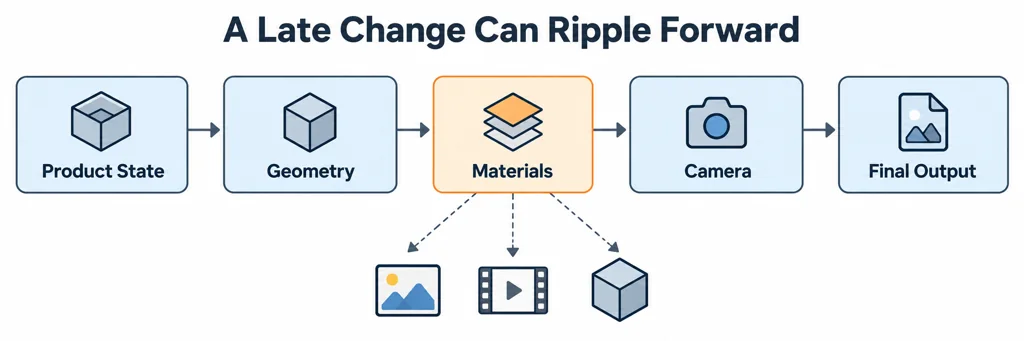
Set an order for feedback: product state, geometry, materials, camera, then final output. If a product finish changes after final renders begin, the effect depends on how many variants and outputs reuse that material.
A clear scope does not make a project rigid. It tells the team what changes are normal revisions and what changes create a new production task.