For straightforward product photos on a clean white background, published rates can start around $25–$39 per final image, depending on the provider and the booking terms. ProductPhoto.com lists $25 at its qualifying volume tier and $35 for smaller orders; soona lists $39 per photo, with booking or membership costs to consider separately.
That gives you a starting point rather than a complete budget. Photographers Ranked's pricing guide puts standard white-background photos at $25–$75 each, props-only lifestyle images at $100–$300, and lifestyle and hero images more commonly at $150–$500+ per image. Different products and briefs take different amounts of work.
To work out what you will actually spend, count the finished images you need, and then factor in preparation, styling, editing, shipping, and usage rights. Compare complete quotes for the same brief. A low image price and a higher package price may include quite different services.
All of the prices in this guide were verified against each provider's published pricing pages in November 2026. Published rates change, sometimes several times a year, so confirm the current price list before you build your budget.
What drives product photography costs?
Products, SKUs, and angles
A SKU, or stock keeping unit, is the internal code your store uses to track a specific product or variation. For budgeting, list the actual products and variations that need photographs rather than relying on the collection name.
An angle is the camera viewpoint showing the product: front, side, back, or a tight close-up of a specific detail. The more viewpoints you need, the more final images you should include in your brief.
When studios price a shoot, one photo means one finished image from one angle. Decide which views actually explain your product — the front, side, back, and any detail a shopper would assess — and then ask the photographer to price that exact list.
Product complexity, styling, and props
Photographers Ranked puts white-background shots at $25–$75 each for simple everyday products and $75–$200 for complex items such as jewellery or electronics. These are guide ranges, not a provider's promise to photograph your item at a fixed price.
For lifestyle shoots, spell out everything that needs to appear in the scene around your product. Show how the product should look once it is photographed, and be specific about the props and arrangement. A plain surface, a styled room, and a scene involving people are very different briefs. Ask each studio who supplies the props and who prepares the scene.

Studio, location, and people
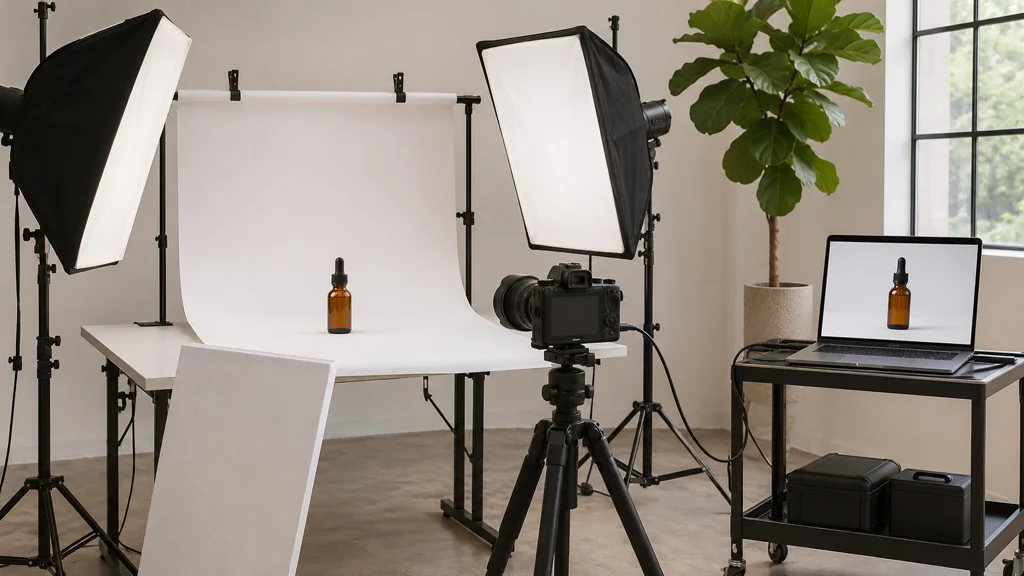
Whether you book a studio shoot or an on-location shoot, the quote should be built around the actual production setup. A studio shoot and an on-location shoot should be priced against the same brief, so the studio can clearly show what is included and what counts as a separate service.
As a real provider example, soona lists full-body models starting from $159/hour, hand models from $79/hour, and stylists from $149/hour. Photographers Ranked lists lifestyle photography with models at $200–$600 per image, with model fees of $200–$600 per day on top of photographer fees.
Retouching and usage rights
Retouching is the post-production editing work that turns a raw camera shot into a finished product-page image. Every photo delivered should be edited, but the amount of work, and whether it is included in the headline price, varies. For photos with complex lighting or strongly reflective surfaces such as jewellery, glass, and metals, extra retouching will almost certainly be needed. Ask what is covered in the standard rate and what is charged separately. Some photographers charge a $15–$50 per image retouch fee, while others include it.
Licensing is the legal permission to use the finished photographs under agreed terms. Always check what happens if you use an image outside those terms: putting it on a different sales channel, a different platform or website, or in paid advertising rather than on your own store. Where a supplier quotes an apparently cheap per-image rate, check the content of its licensing terms.
According to Photographers Ranked, standard web and e-commerce usage rights typically cost less than licensing for paid ads or packaging. Exclusive usage rights can cost an additional $1,000–$5,000 for exclusive advertising rights on top of campaign shooting fees. Always license images only for the intended use because licensing fees increase with a broader legal right to use the image.
Licensing terms vary from one provider to the next. ProductPhoto.com includes unlimited, royalty-free commercial usage rights in its image prices. In comparison, soona's rates are for a limited usage licence, with extended licences priced separately.
Typical pricing models: per image, per day, or per project
Per-image pricing
Per-image pricing works well when you already know the exact list of final photographs you need. Before committing to a package, confirm the exact number of images you will get, what time is included for setup and file preparation, and whether you can cancel free of charge — that answer has a direct effect on the cost per photo.
| Published source | Listed price | What to check |
|---|---|---|
| ProductPhoto.com | $35 each for 1–30 photos; $29 for 31–99; $25 for 100+ | Final-photo count and applicable extras |
| soona | $39 per photo | Studio pass or membership, plus any additional services |
| Photographers Ranked | $25–$75 per standard white-background image | Guide estimate; request a quote for your products |
ProductPhoto.com has no minimum order requirement, and its published terms include an unlimited, royalty-free commercial usage right. Its higher prices are also justified by the quality standard it claims: professional lighting and a quality guarantee based on its years of experience.
soona lists a $149 studio pass per booking, or annual memberships at $13/month for Basic and $49/month for Standard, billed annually, with the studio pass included for free on both memberships. Premium photo edits cost $9+ each, or come free on the Standard plan.
Day rates
Photographers Ranked lists product photographer day rates of $800–$2,500, with a typical output of 20–80 final images per day. Lifestyle photography typically delivers 8–20 final images in a full day. Expect the upper end of that range for photographs that need complex styling, modelling, or a more detailed creative brief.
Treat those daily output ranges as planning guidance rather than guaranteed deliverables. Ask the photographer what type of image is included in the day rate before you book, as styling, food preparation, technical setup, premium licensing, or any work with reflective materials may add to the cost.
Hero or campaign shots sit at the top end of that day-rate range. Because a hero image serves as the first visual that a store or campaign presents, agree on a price for hero or campaign work before the shoot starts to avoid an unexpectedly high invoice.
Project and package pricing
A project quote bundles an agreed set of deliverables under a single defined scope. Look closely at what is included before you compare one package with the next. Some packages offer extra angles, video, or a faster turnaround. Others offer fewer images for the same price. Compare each package based on the same list of things you need and the date you need them by.
ProductPhoto.com lists lifestyle and creative work from $375 for a set of lifestyle scenes, quoted based on the scope and props required. Its Amazon listing packages start at $699 per product, and the published tiers add more deliverables as they go up — Growth ($1,299) adds A+ content, Complete ($1,999) adds a listing video, and Premium reaches $3,499. When comparing plans, consider not just the extra services, but the image count and the time available for setup, file preparation, and decisions.
Do not assume that these package prices cover the exact same scope of work as another studio's project quote. A project or package quote bundles an agreed list of deliverables under one fixed scope. A package typically states the whole set: the number of products, the required angles, and the number of final versions. ProductPhoto.com offers a one-time "single product pricing" plan for a single product whose deliverables are three standard angles — one front, one back, and one side — plus one hero image and 360° motion.
Hidden costs buyers forget
Reshoots and changed instructions
It is important to separate fixing a shot that did not follow your order from asking for a different angle that was not in your brief. The studio should repeat the shoot for free only if the brief was followed incorrectly. However, if the instructions have changed, then the studio will charge a fee for the extra shoot, which can be costly for the buyer. Work out in advance who will be covering the costs of any additional photography work.
Agree on the product condition, camera framing, background, required angles, and sign-off process before the shoot starts. If everyone is working from the same brief — with the products prepared as specified — you should keep the number of reshoots to a minimum.
Extra colors, new angles, and seasonal work
Adding a new colorway often means adding a whole new set of shots, especially when you also need matching backgrounds. When you want to update product photos for the festive season or for a particular event, remember that they need to be planned for — and the photographer needs to be told about the concept in good time.
In the same way, a seasonal campaign may call for fresh props, new styling, or different room scenes. Clarify the timing so the same content team handles the rollout on schedule.
Shipping, rush work, and product surcharges
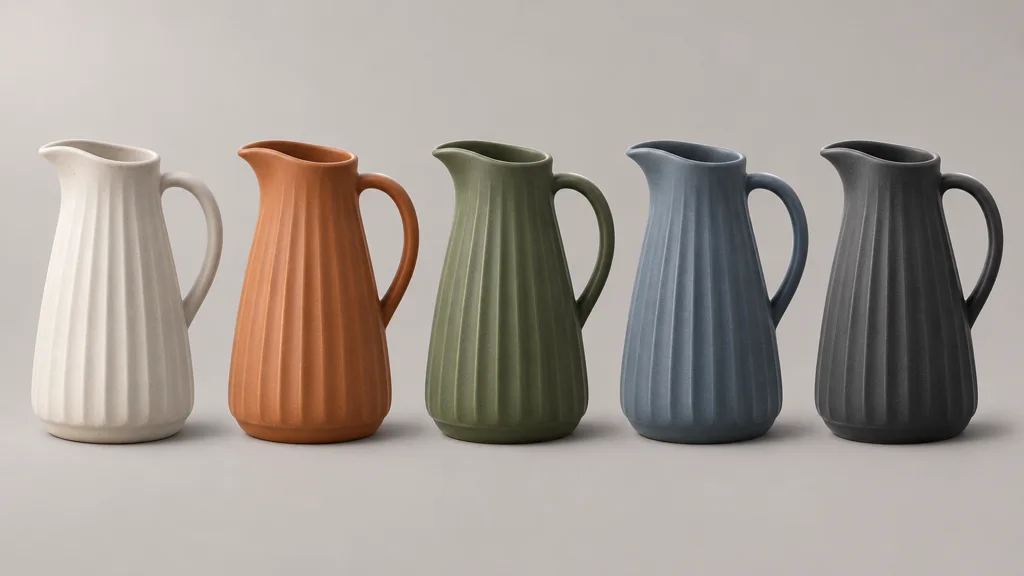
Many providers add extra charges for shipping, fragile or oversized products, and rush turnarounds.
At soona, for example, product surcharges are $10 per photo for glass, jewellery, or items over 24 inches or 15 lbs, while rush proofs delivered in 3 to 5 business days cost +$15 per photo ($100 minimum).
When 3D rendering costs less—and when it does not
3D rendering produces your final product visuals from a digital 3D model instead of a camera shoot. A studio can produce any angle, background, or color variation without you having to return the physical item. The process usually involves two stages: building the 3D model and then producing the product visuals from it.
The Motion Empire's rendering cost guide, which draws on published pricing guides from rendering studios, presents 3D rendering as cheaper than traditional studio photography. It is not, however, a like-for-like comparison of the same briefs.
As the guide points out, building the 3D model itself accounts for a larger share of the quote than the individual rendered images. So, if you only need one image, or only a few, then the model build may make the total spend higher than a photography quote for the same deliverables.
Comparing quotes from rendering studios, PixReady and Transparent House list simple studio renders at $150–$500 per image and photorealistic hero images at $300–$1,000. PixReady presents these ranges as including 3D modeling. It notes that a one-time model build is usually charged first, although its published price ranges are less well suited to standalone package comparisons.
Where reuse can reduce costs
According to The Motion Empire, once your digital model is built, generating extra camera angles and new color options becomes a much smaller additional job, so starting from the same model makes extra angles and colorways far cheaper to produce. The Motion Empire says the first render is typically the expensive step, while later renders from the same model are cheaper. The real benefit is that once you have invested in building the model itself, you have many more ways to use and reuse it.
That ability to reuse the model makes 3D rendering well worth pricing out when your catalog keeps growing and every new angle, colour, and version multiplies the cost of a physical shoot.
Where photography can remain cheaper
If you only need a single hero image of one product, traditional photography is often the cheaper option. The studio can set up a single shoot at a good price, while the model build required for the 3D image would add cost that a single render could not justify.
When you only need a small batch of straightforward product photos and have no clear plan to reuse a 3D asset later, traditional photography will usually win on price. That is why the decision should start with a careful, written comparison of two separate quotes for the same scope and the same number of final images.
Always compare like with like: the exact same products, camera angles, backgrounds, editing standards, image sizes, and listing requirements, and the same licensing terms.
FAQ
Should I ask for a price per SKU or per photo?
Send over both your product list and your required shot list. A per-SKU quote has to spell out which photos are included per product and from which angle. For accurate pricing, send the studio a separate product list and a shot list — a spreadsheet list of final edited images ready to publish on your product pages — so it can price for the exact team, preparation, and licensing required for the shoot.
Is a day rate better value than paying per image?
That depends on how many finished images you realistically get in a day and what work is included in the rate. Ask what the expected output is before you commit. Timings have a major impact on whether a day rate works out cheaper for you: the studio's day rate could seem cheaper than a per-image quote at first, but if the studio only produces five images a day, then the cost per image could be higher.
Are retouching and commercial rights usually included?
They vary from one provider to another. ProductPhoto.com includes unlimited, royalty-free commercial usage rights in its prices. Retouching is also described as included in the standard image price, so do confirm with the studio exactly what level of retouching is included and what extra items may be charged separately.
Can ordering more photos lower the price?
Yes, published volume tiers can lower your per-image price once your order qualifies — ProductPhoto.com lists $35 each for 1–30 photos, $29 for 31–99, and $25 for 100+. Confirm exactly how many product photos you need before comparing prices — this affects cost comparisons between studios. Compared with paying per photo, studio costs for shooting large numbers are lower because a studio uses the same setup for every shot, while reshooting the same product for different colorways or sizes means setting up the studio again for each variant.
What should I send when requesting a rendering quote?
Send clear product references, exact dimensions, your required shot list, and any existing 3D model files so the studio can evaluate them. Explain which colors, camera angles, and backgrounds you need right now, and which ones you might ask for down the road. Ask the studio to separate the upfront modeling and setup work from follow-up renders in the quote, without assuming a fixed fee or reuse discount.
How much does 3D Vision Art charge for rendering?
3D Vision Art quotes every rendering project individually, because the scope depends on the product itself, the angles and variations you need, the background scenes, and how you plan to use the finished images. Share those details with us so we can price your project accurately, and then compare our quote side by side with a photography quote covering the exact same deliverables.
Get a rendering quote for your image list
If model reuse could suit your budget, consider 3D Product Rendering Services from 3D Vision Art. Share your required images and variations to discuss a project-specific price.
Share your required images and variations to discuss a project-specific price.
Get a Free Quote ↗