The difference is packaging, not a different 3D language
Both GLB and .gltf use the glTF scene model. The difference is how the asset stores its JSON description and resources. A .gltf file can refer to external buffers and texture images. A GLB container can hold the JSON and a binary buffer in one file.
Do not decide by file extension alone. Start with the delivery task. A product preview sent to a client has different needs from a production repository where artists and developers must inspect textures and revise metadata.
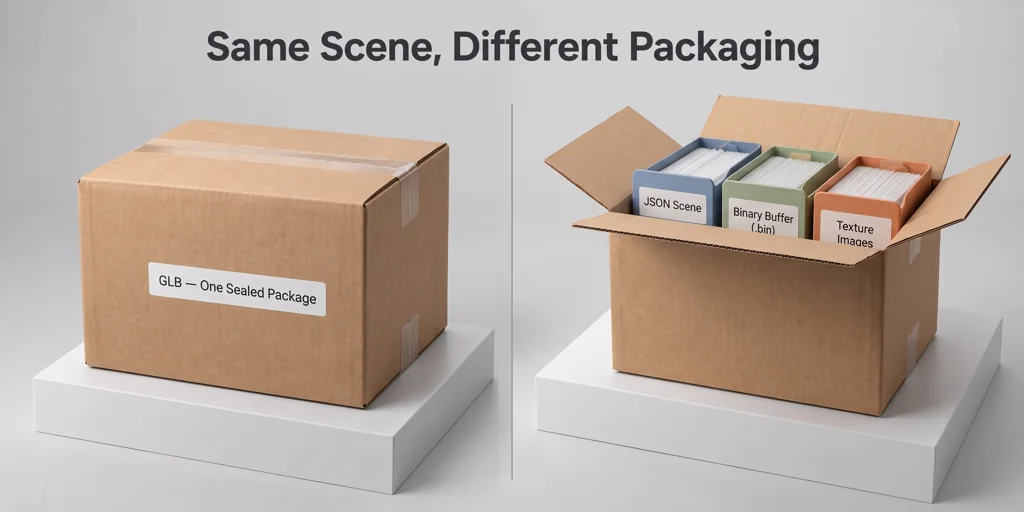
Choose GLB for a compact handoff
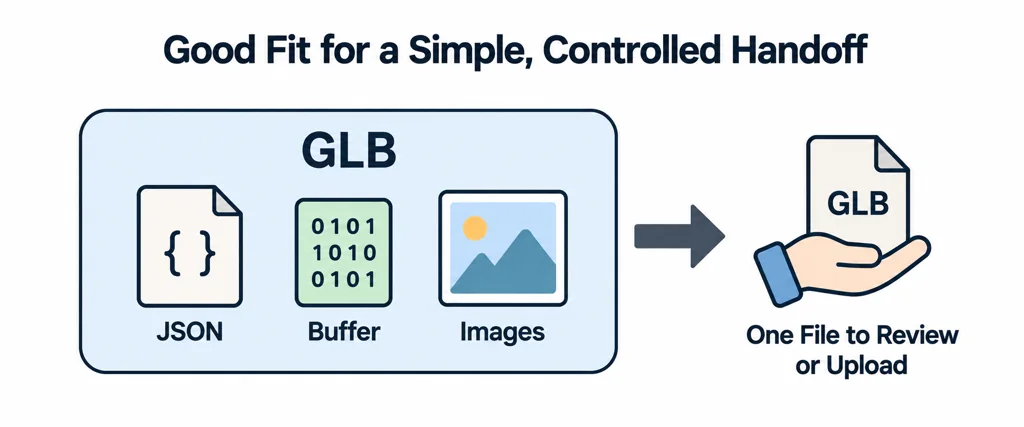
GLB is useful when a team needs one reviewable file. It reduces the chance that an image or .bin dependency gets separated from its scene description. That makes it a good fit for a simple viewer upload, a single asset download, or a controlled handoff between teams.
A GLB can still refer to external resources. Inspect the exported asset before assuming that the file is self-contained.
Choose separate glTF when resource access matters
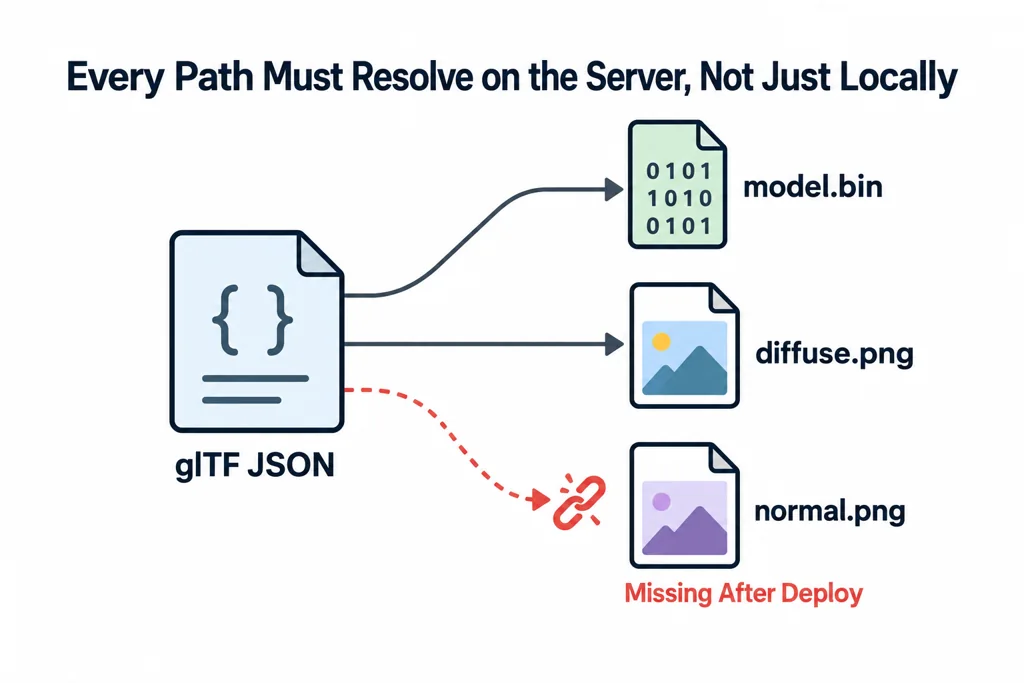
A separate .gltf package exposes its JSON, buffers, and image files. That can make it easier to inspect paths, replace a texture, compare a changed material, or cache shared resources in a larger application.
The trade-off is delivery discipline. Every referenced file needs the correct path, name, and server response. A model may work on an artist workstation and fail after deployment when one image is missing or a case-sensitive path changes.
Consider embedded resources and hosting separately
A glTF JSON file can also embed resources through data URIs where the format permits them. Base64 represents each three input bytes with four characters, with padding as needed. That increases the encoded payload by roughly one third before transport compression. It can suit particular workflows, but should not be selected merely to avoid learning resource paths.
| Packaging | Useful property | Check |
|---|---|---|
| GLB | A binary container can consolidate delivery resources. | Inspect any remaining external references. |
| Separate glTF resources | Individual images and buffers remain accessible. | Preserve URI paths and cache identity. |
| glTF with embedded data | Resources can travel inside JSON. | Consider encoded size, parsing, and the consumer's support. |
Serve glTF JSON as model/gltf+json and GLB as model/gltf-binary. Resource identity, response bytes, access policy, and caching still need their own deployment checks. Packaging alone does not establish a faster usable interaction or a more accurate material result.
Use the same acceptance checks for both
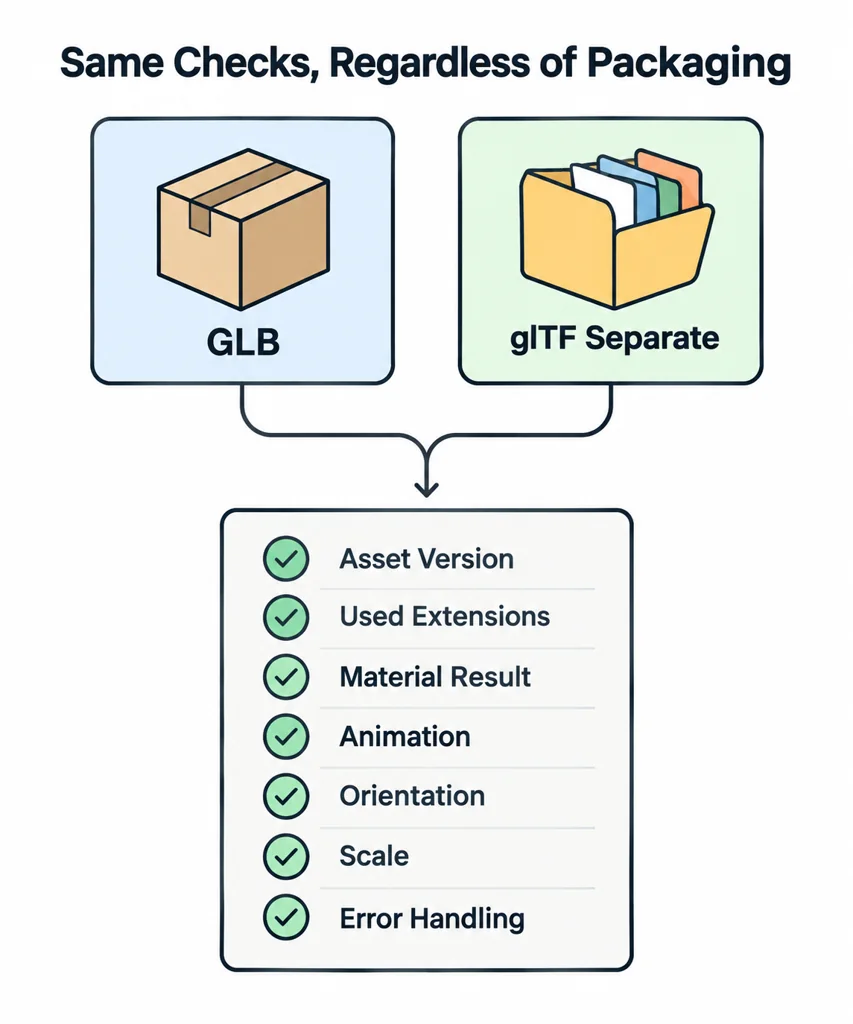
Packaging does not replace validation. For either option, verify the asset version, used extensions, material result, animation, orientation, scale, and error handling in the target viewer. Then test production hosting when the asset uses external files.
A practical team can keep both forms. Use the separate package during inspection and make a GLB release file for distribution when that matches the viewer and release process.