Separate geometry from product decisions
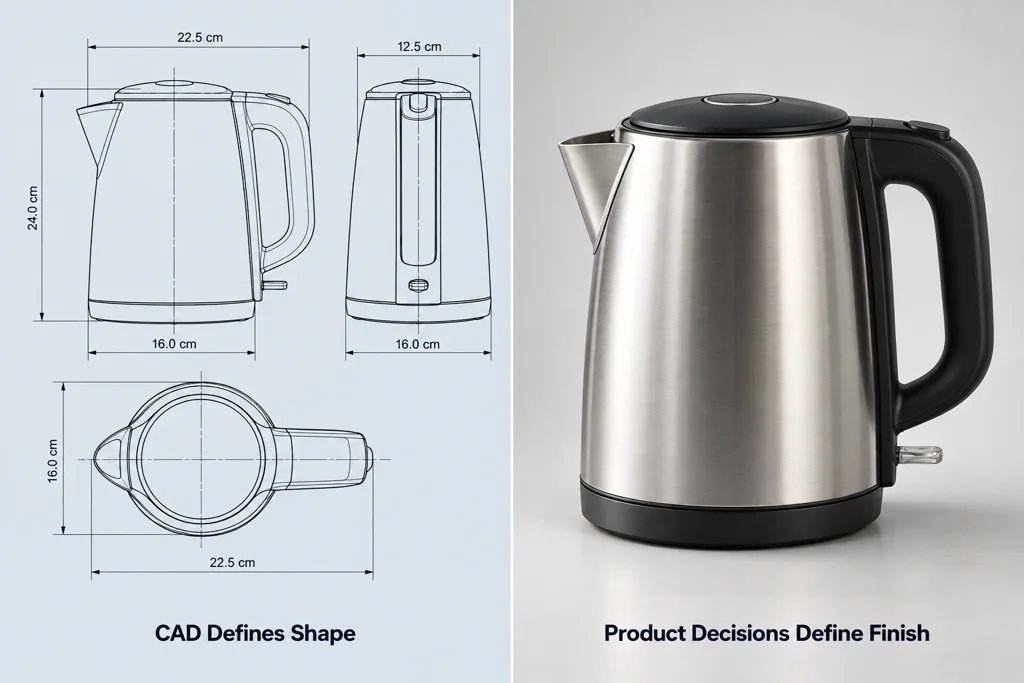
CAD answers many geometry questions. It may not answer which finish is approved, whether a seam is visible, how a coating reflects light, or which product configuration should appear on the page.
Send the model with a short product decision sheet. Identify the exact configuration, dimensions that must remain true, parts that move, parts that may be simplified, and markings that must remain legible.
Name the source of every answer
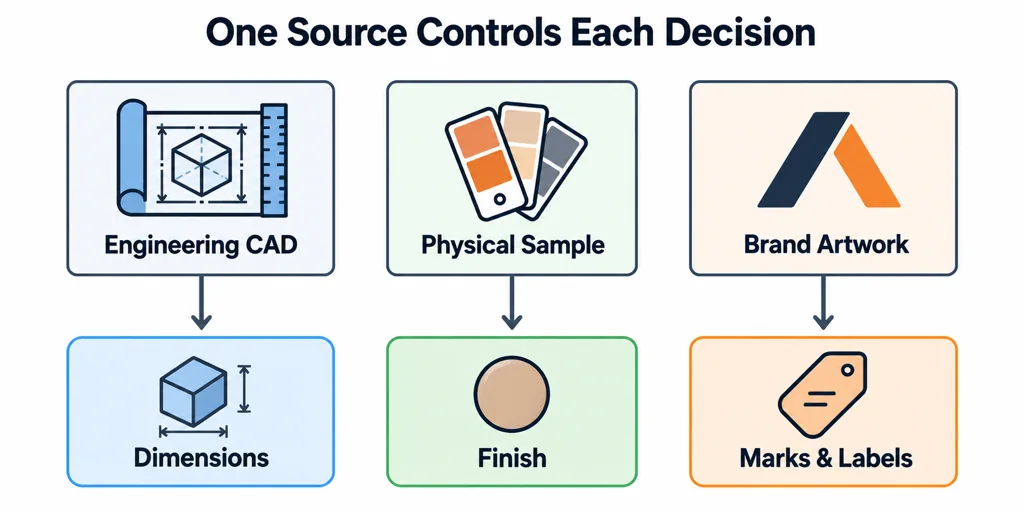
A render team may receive CAD, a material sample, a product photograph, and a marketing layout that disagree. State which source controls each decision. Use engineering data for dimensions. Use a current physical sample or controlled reference for finish. Use brand artwork for marks and labels.
This prevents a render review from becoming a debate about which reference was meant to win.
Mark what can change
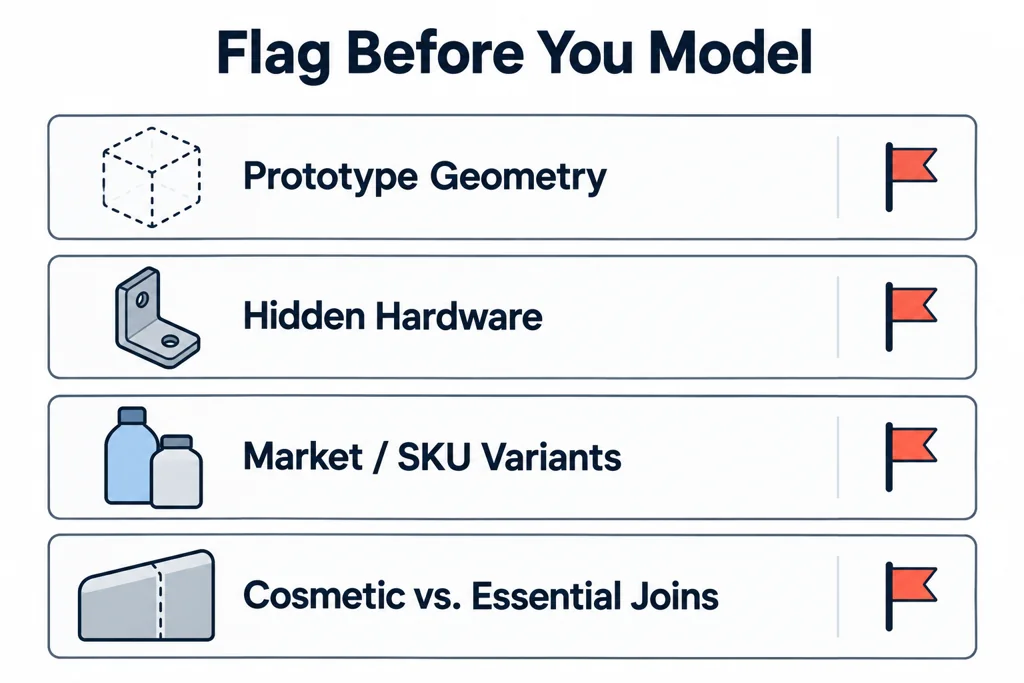
Flag prototype geometry, unfinished components, hidden hardware, and components that differ by market or SKU. State whether a gap, split line, or fastener is cosmetic or essential. The team can then decide whether to model it, represent it with a texture, or omit it from a customer-facing view.
For web delivery, preserve the hierarchy and naming that the application needs for selection, animation, or material assignment. glTF scenes use nodes and transforms, so a clean handoff helps later interactive uses even when the first output is a still image.
Include a decision sheet with the geometry
| Question | Controlling source | Handoff note |
|---|---|---|
| Which size and assembly revision? | Approved engineering data. | Revision and dimensions that must remain true. |
| Which visible finish? | Approved sample or controlled reference. | Material ID and affected parts. |
| Which marks and labels? | Current brand artwork. | Placement and regional version. |
| Which details may be omitted? | Product-owner approval for the intended views. | Explicit simplification list. |
| Which parts must remain interactive? | Application requirements. | Stable identifiers and transform boundaries. |
Internal threads, tooling, or hidden hardware may be unnecessary in a marketing derivative, but do not remove them from the authoritative source. Keep the cleaned delivery copy separate. Review cosmetic part lines, edge treatments, and badges before omitting them; a small feature can be essential to product recognition even when it contributes little to the triangle count.
Review a single representative output
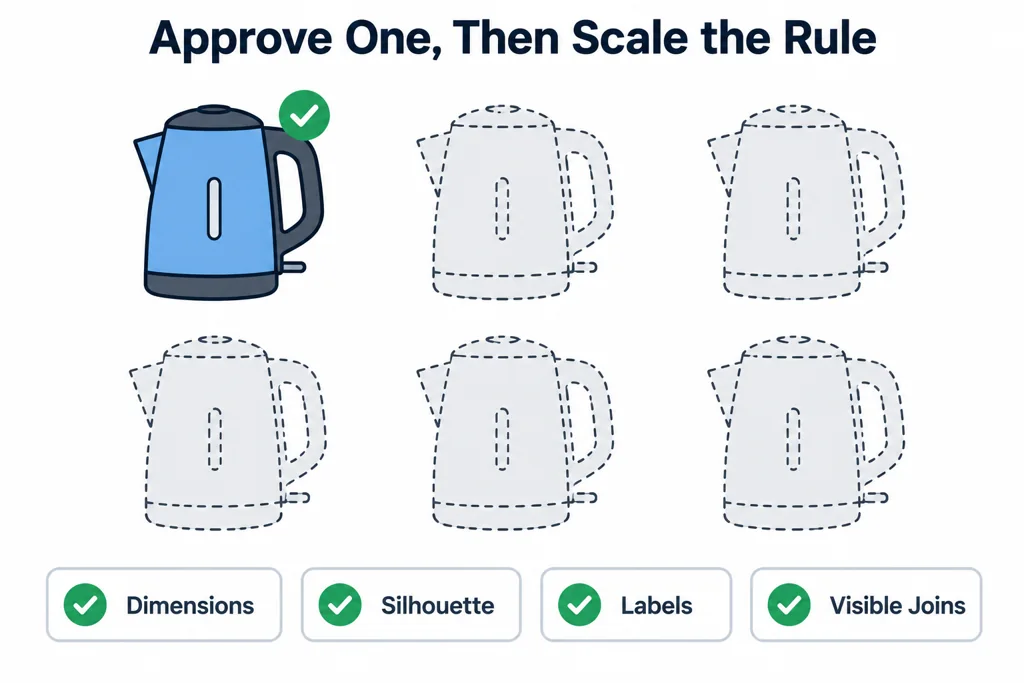
Before building every variant, review one product state with the intended materials and camera. Check dimensions, silhouette, labels, and visible joins. Then approve the reusable rules before the work spreads across the catalog.
Good CAD handoff gives a visualization team enough decisions to work without guessing. It does not require the CAD model to carry every render instruction.